
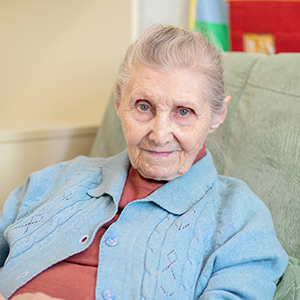
 Bridget “Biddy” Baker (born 1945) looks like a small, sharp-eyed old woman who belongs in an apron with flour on her hands… until you realize the apron is basically tactical gear.
Biddy grew up in Wyrdwood with a bloodline that binds—old wards stitched into the bones of her family home, the kind of protections that don’t care about modern rules or polite magickal society.
As a young woman coming of age in the late 50s and early 60s, she was bright, furious with the patriarchy and its sycophantic women, and allergic to being told “no,” which made her a natural fit for the era’s bra-burning and marches. She left Wyrdwood to go to college at the School of the Art Institute of Chicago. There, she poured out her passion for painting, found feminism the way some people find religion, and went feral with purpose.
During college, she became best friends with—and trusted fourth-in-command to—Shulamith Firestone, who in Biddy’s version of events was not only a radical feminist “firebrand,” but kith: a phoenix who returned from death in flame and laughter. Shulamith’s fearlessness was real, but it came at a cost. Her enemies constantly tried to knock her off her perch.
More than once Biddy survived only because Shulamith quite literally burned a way out. Biddy learned two truths in those years: (1) many men punish women who speak up, and (2) the only reliable safety net is the one you build yourself.
Eventually, Biddy came home to Wyrdwood. Not because she gave up the cause, but because she had become pregnant as the result of a politically-motivated assault. She chose to raise her daughter on her own as a single mother and settled down to make a cozy life for the child.
They lived happily for many years, and her daughter eventually married and had a child of her own—Little Frankie.
Then tragedy struck. When Little Frankie was just four, her mother and father were killed in a rockslide. Biddy took her granddaughter in. She raised Frankie with strict tenderness and abundant affection, competence, chores, soup, rules, and an unspoken education in how to survive people who think they own you.
Now, in her “retirement,” Biddy is still a revolutionary—albeit locally. She is the heart-anchor of her house’s ward system, the keeper of seven strange cats bound to the property (including six magatots and one cupid agent). Her humor is dry, her love is fierce, and her greatest softness is reserved for the vulnerable—lost children and animals the Universe sends her way.
